
Singapore's Hawker Centres Are a Food Lover's Paradise

Updated: Aug 21

When people think of Singapore, iconic landmarks such as Marina Bay Sands and the Merlion often come to mind. But ask locals what truly defines Singapore, and many will give the same answer: food.
Hawker centres, also known as food courts or hawker centers, are popular affordable dining destinations in Singapore, Malaysia, and Hong Kong. Typically located in markets or public buildings, they feature numerous street food stalls, making them ideal for experiencing local, affordable cuisine and everyday culture.
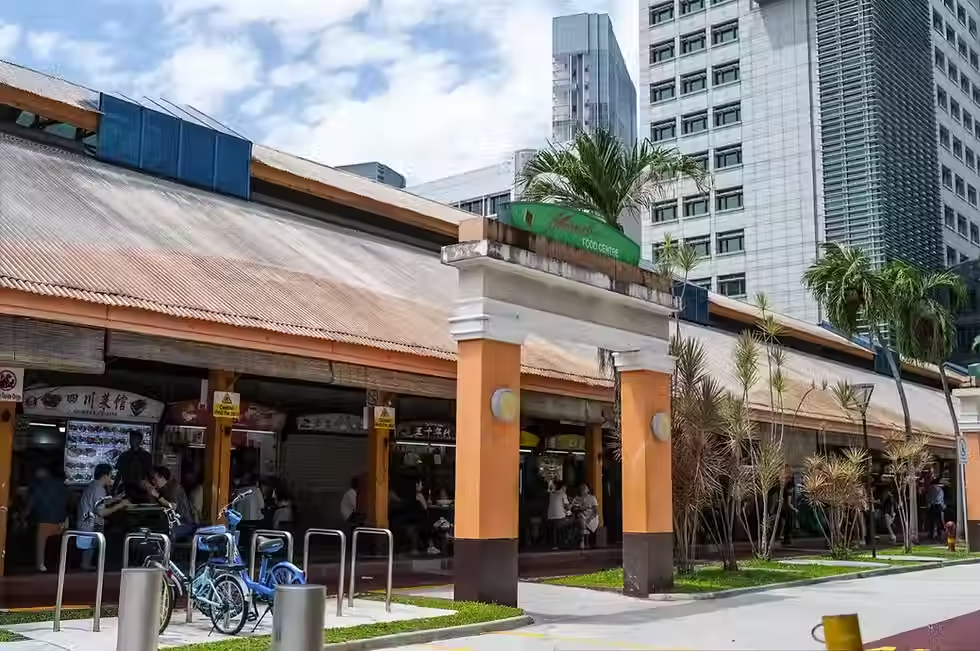
Maxwell Food Centre: Located in Chinatown, it's home to popular restaurants like Tian Tian Hainanese Chicken Rice and Zhen Zhen Congee, known for their long queues.

Lau Pa Sat: Located in the financial district, its Victorian architecture and lively outdoor satay stalls at night create a vibrant atmosphere.

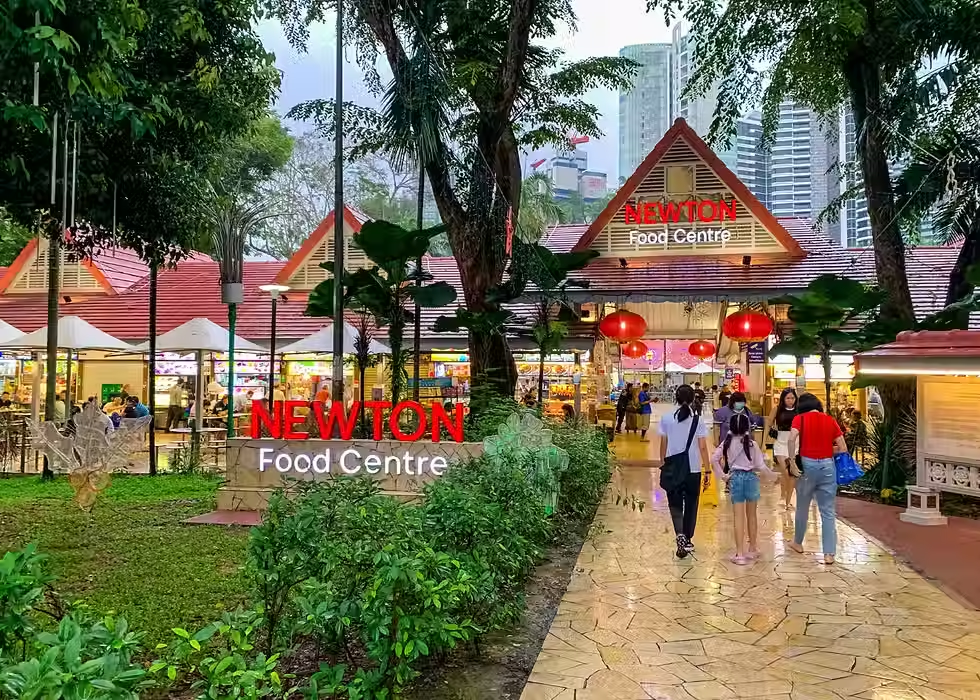
Newton Food Centre: Famous for its seafood, chili crab, and satay barbecue, it's a popular choice for tourists.
More than just food courts, hawker centres represent the history, diversity, and identity of Singapore itself.
A Taste of Many Cultures in One Place
Singapore is one of the world's most multicultural nations, with Chinese, Malay, Indian, and other communities living side by side.
This cultural diversity is reflected in its food.
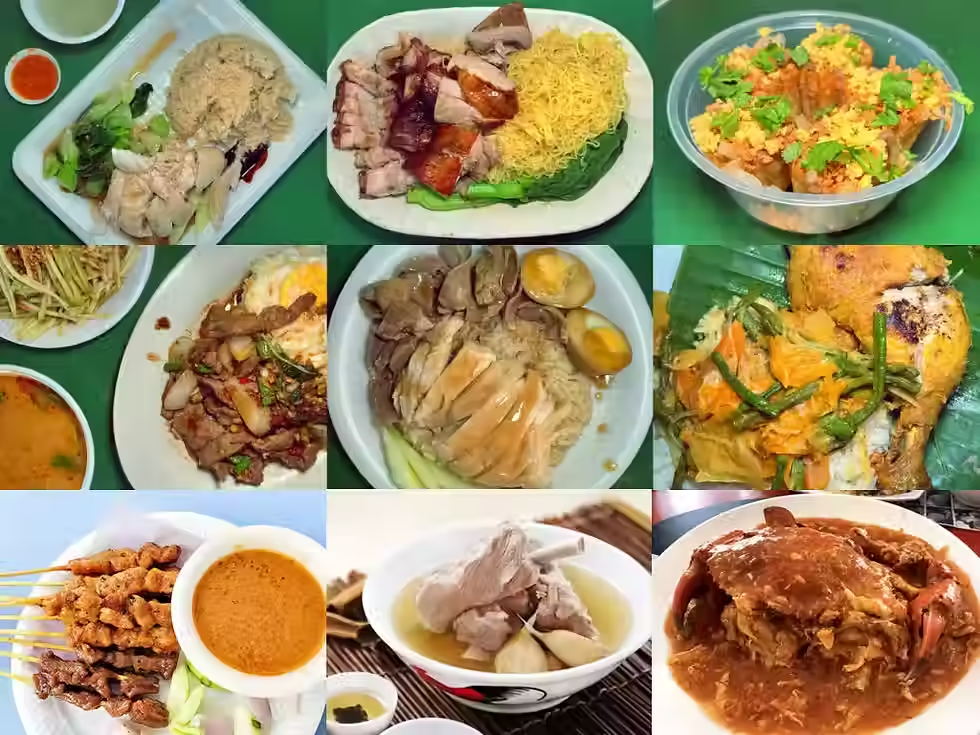
At a single hawker centre, visitors can enjoy:

Hainanese chicken rice is a popular dish in Southeast Asia, found in Malaysia, Singapore, Thailand, Indonesia, and Brunei. It is also widely considered the national dish in Singapore.

Curry laksa is a culinary blend of Malay, Chinese, and Peranakan influences. While the specific ingredients vary across different ethnic groups and regions, the core characteristics remain the same. Its most distinctive feature is the use of a curry broth infused with coconut milk, resulting in a richer, more flavorful taste. In Central and Southern Malaysia, Singapore, and overseas, "laksa" generally refers to curry laksa, while in Northern and Central Malaysia it's often called curry noodles. Common ingredients in curry laksa include shredded chicken, bean sprouts, cockles, shrimp, and eggs. In Chinese communities, curry laksa may also include pork blood, pork skin, roast pork, and char siu.

Satay is a classic Southeast Asian charcoal-grilled meat skewer dish originating from Indonesia, and it has now become popular in Singapore, Malaysia, Thailand, and other places. The meat is marinated with spices such as turmeric powder, lemongrass, and coconut sugar, then skewered on bamboo sticks and grilled until charred. The most essential way to eat it is with a rich and spicy peanut sauce (Kuah Kacang), accompanied by onions, cucumbers, and Malay rice balls.

Singapore-style Roti Prata is crispier and is served for breakfast, lunch, afternoon tea, and dinner. It's often eaten with teh tarik or iced tea. It's commonly served with dal ga (vegetarian curry, Malay: Dahl, also known as dalca) or curry with anchovy chili sauce (Malay: Sambal ikan bilis).
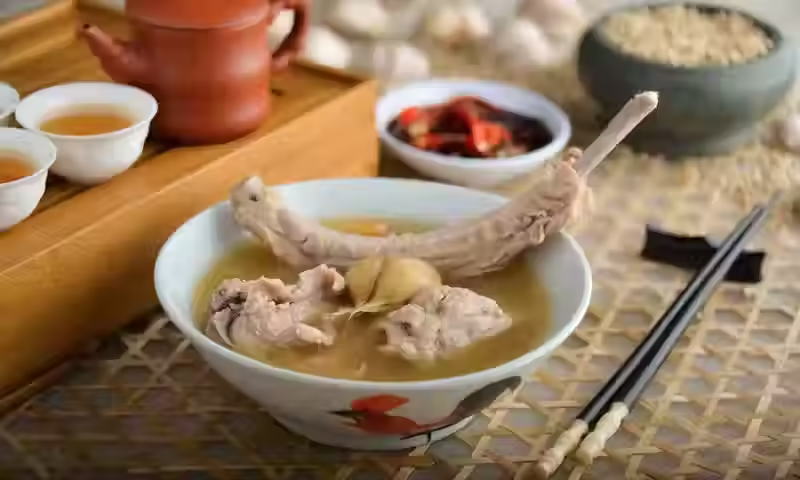
Bak kut teh is a dish made primarily with pork ribs, slow-cooked in a broth, popular in the Hokkien and Teochew communities of Malaysia and Singapore. The name literally means "pork rib tea" in the Hokkien language. It is typically made by simmering pork ribs with various herbs and spices for several hours. While the dish itself does not contain tea leaves, its broth is similar to herbal tea. Besides pork, seafood, chicken, or other meats can be substituted.

Nasi lemak is a signature Malay rice dish originating from Peninsular Malaysia and popular throughout Southeast Asia. It is widely distributed, not only considered an "unofficial national dish" in Malaysia, but also in Singapore, Brunei, southern Thailand, and the east coast of Sumatra in Indonesia.
A complete Nasi Lemak must have six core elements: starchy Nasi Lemak, protein-rich eggs (boiled or fried), vegetables such as cucumber slices (or water spinach), garnished with peanuts and fried anchovies, and the crucial soul ingredient—Sambal.

Char Kway Teow is a Teochew snack and a representative dish of Teochew people in Penang, Malaysia. It can be found in coffee shops, food centers, and roadside stalls throughout the Malay Peninsula. The main ingredients include shrimp, eggs, Chinese sausage, mung bean sprouts, fish cakes, and chives. Singaporean Char Kway Teow also uses a touch of sweet soy sauce.
Each dish tells a story of migration, cultural exchange, and generations of culinary tradition.
Few places in the world offer such a rich variety of authentic cuisines under one roof.
Affordable Food, Exceptional Quality
One of the most surprising aspects of Singapore's hawker culture is the quality of food available at affordable prices.
While Singapore is often considered one of Asia's most expensive cities, visitors can still enjoy satisfying local meals without spending a fortune.

Many hawker stalls have been operated by the same families for decades, with recipes carefully passed down from generation to generation.The result is food that combines tradition, consistency, and remarkable flavor.
The Soul of Singapore's Food Culture
For Singaporeans, hawker centres are more than places to eat. They are community gathering spaces where people connect through food.

Whether enjoying a quick breakfast before work or sharing a late-night meal with friends, hawker centres play an important role in daily life.The sounds of sizzling woks, the aroma of spices, and the lively conversations create an experience that cannot be replicated elsewhere.
More Than a Meal
A visit to a hawker centre is not simply about eating. It is an opportunity to experience the culture, history, and everyday life of Singapore.
In a world where dining is increasingly shaped by international chains and modern trends, Singapore's hawker centres remain proudly authentic.

For food lovers, they are not just places to find great meals—they are one of the country's most treasured cultural experiences. If you truly want to understand Singapore, start with a table at a hawker centre and a plate of your favorite local dish.


I really like Outram Park Fried Kway Teow Mee