
Autumn in Taiwan: What Do Locals Eat?


Autumn in Taiwan doesn't always arrive with dramatic red forests or streets covered in fallen leaves, sometimes, it arrives much more quietly, The afternoon sun feels softer, The evenings become cooler, Fruit stalls begin filling with orange persimmons, Hot pots return to dinner tables, Steam rises from bowls and clay pots.
And somewhere in a restaurant, a pot of ginger duck begins bubbling over the flame, In Taiwan, one of the best ways to notice the changing seasons isn't simply to look at the trees, Look at what's on the table.
So if you're visiting Taiwan in autumn, what should you eat? Let's start with one of the season's most beautiful sights.
1. Persimmons — Taiwan's Golden Autumn Fruit
Drive through parts of Hsinchu County during persimmon season and you may encounter an extraordinary sight.
Hundreds—or even thousands—of bright orange persimmons arranged beneath the sun.
They look almost like a field of tiny orange lanterns.

One of the best-known places for this tradition is Xinpu Township , Its hilly terrain and relatively dry climate provide favorable conditions for growing and drying persimmons, and dried persimmons have become one of the area's famous specialties. Xinpu is also strongly associated with Hakka culture.
Fresh persimmons can be crisp and refreshing or soft and intensely sweet, depending on the variety and ripeness.
But the transformation into dried persimmon —Shì Bǐng — is something special, As the fruit slowly loses moisture, its sweetness becomes concentrated and its texture becomes dense and chewy, For visitors, however, the experience isn't only about eating.
Seeing rows of golden-orange persimmons drying under the autumn sun has become one of Taiwan's most photogenic seasonal scenes, It's agriculture—but it almost looks like art.
2. Autumn Crab — When the Best Part Is Inside the Shell

When the autumn wind begins to blow, it's time for crab, In Taiwan, autumn is strongly associated with enjoying seasonal crabs, particularly for diners looking for rich roe and creamy crab paste.
The experience is almost the opposite of fast food, Eating crab takes time, You open the shell, You separate the legs, You search carefully for every piece of meat.
And then you reach the golden-orange richness inside.
Wanli Crab (Local Sea Crab): A specialty of the Wanli area of New Taipei City (such as Yehliu and Guihou fishing ports), mainly of three types:
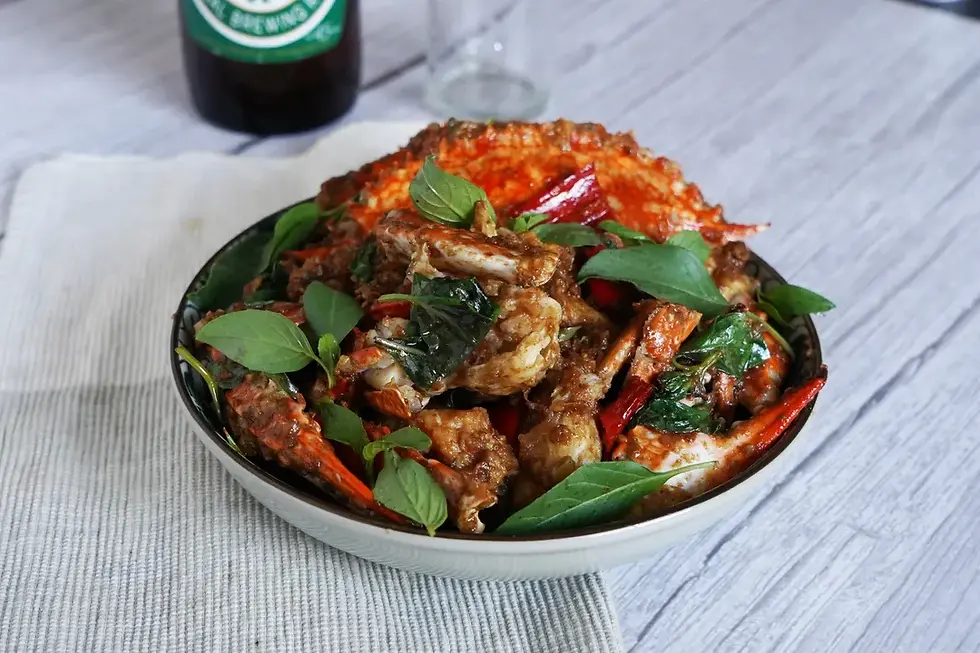
• Three-spot Crab: Available from approximately September to November, with three distinct red spots on its shell. The meat is delicate and the price is affordable.
• Flower Crab: Abundant, firm, and sweet meat with a rich seafood flavor.
• Rock Crab: Thick and rough shell with large claws; the meat is springy and suitable for steaming or hot pot.
3. Ginger Duck — The Smell That Says Cooler Weather Is Coming

Ginger duck—commonly written in English as ginger duck—is one of Taiwan's most recognizable cool-weather dishes.

Duck is simmered with ginger and other ingredients into a deeply aromatic broth; preparations commonly also involve sesame oil and rice wine, The pot arrives bubbling, Steam rises into the cooler evening air.
Friends sit around the table adding vegetables, mushrooms, tofu and other ingredients, The longer dinner continues, the richer the pot becomes, Ginger duck also connects with the Taiwanese idea of 補 (bǔ)—using certain foods as seasonal nourishment.
You don't need to understand traditional food philosophy to appreciate the experience, though, On a cool autumn evening, sitting around a steaming pot simply feels right.
And ginger duck is not some obscure dish known only to food historians. Taiwan's Tourism Administration includes ginger duck among regional culinary specialties.
4. Roasted Sweet Potatoes — The Simplest Comfort Food
Not every autumn food needs a restaurant, Sometimes all you need is: a hot sweet potato, Sweet potatoes have a long place in Taiwan's food culture, and roasted sweet potatoes remain an everyday comfort food.

You can find them in traditional markets and shops—and famously, even in convenience stores, Break one open while it's still hot and the inside is soft, golden and naturally sweet.

There's nothing complicated about it, No elaborate sauce, No beautiful plating, No expensive ingredients, Just heat, sweetness and that unmistakable roasted aroma.
The Tourism Administration even highlights roasted red-heart sweet potato among the specialties found around Jinshan Old Street. Sweet potatoes aren't exclusive to autumn, Taiwanese people eat them throughout the year, But when the air becomes cooler, holding a freshly roasted one in your hands suddenly makes much more sense.
5. Roasted Chestnuts — Follow the Smell
Then there's another autumn aroma — sugar roasted chestnuts, You may encounter a vendor before you actually see one, That's because the smell gets there first.
Chestnuts tumble inside a large heated wok, traditionally associated with dark roasting material and sugar, until the shells become hot and the nuts inside turn soft and fragrant.


Then comes the satisfying part:
Crack > Peel > Eat > Repeat.
A warm bag of chestnuts is the kind of snack designed for walking, You don't really sit down for it, You carry it through a market or along the street, peeling one chestnut after another, Like roasted sweet potatoes, chestnuts are simple.
But that's exactly what makes them feel seasonal, Sometimes autumn doesn't need a complicated recipe, It just needs something warm in your hands.
6. Hot Pot — When Dinner Becomes the Evening
Of course, Taiwan has one food that refuses to wait for cold weather.
Hot pot...Taiwanese people happily eat hot pot even when it's warm outside.
But once autumn evenings become cooler, the experience changes, The steam becomes inviting rather than intimidating.

And hot pot isn't really one dish, It's a format.
You might find:
Shabu-shabu, Spicy mala hot pot, Pickled cabbage hot pot, Milk broth, Herbal broth, Seafood pots, Individual pots.
Huge communal pots for an entire table, Everyone cooks at their own pace, Meat goes in, Vegetables follow, Someone searches for the last piece of tofu.

Someone else insists the soup tastes better after everything has been cooking for an hour.
Dinner slows down, And that's part of the appeal, With hot pot, eating isn't something that happens before the evening's activity, Eating is the activity.
And Then There's Taiwan's Most Unexpected Autumn Tradition
If you happen to visit Taiwan around the Mid-Autumn Festival, you may notice something else, Smoke...Lots of it. People gather outside homes, on terraces and in other permitted spaces around barbecue grills, Meat sizzles, Seafood goes onto the grill, Families and friends sit together late into the evening.

Barbecue has become one of Taiwan's most recognizable Mid-Autumn traditions, Interestingly, it's a relatively modern custom rather than an ancient ritual.
Taiwan's Tourism Administration describes barbecuing as a recent Mid-Autumn practice in which family and friends gather to share a meal.

Traditionally, the festival is also associated with: Mooncakes and Pomelos
Mooncakes symbolize reunion and togetherness, while pomelos have their own cultural associations with the festival.
And Taiwanese children sometimes turn the thick pomelo peel into a kind of improvised hat.
It doesn't improve the flavor. But it does improve the family photos.
Autumn in Taiwan Doesn't Always Look Like Autumn
This is one of the interesting things about traveling in Taiwan, If you arrive expecting the entire island to suddenly turn orange and red in October, you may be surprised, Taiwan stretches from subtropical into tropical climates, and autumn can feel very different depending on where you are and the elevation.

In many cities, trees remain green, Afternoons can still feel warm, Some days may seem suspiciously like summer hasn't received the message yet, But the season is there, You just have to look for it differently.
Look for persimmons drying beneath the sun.
Look for crabs appearing on restaurant tables.
Look for the first busy ginger-duck restaurants.
Look for steam rising from a hot pot.
Look for someone carrying a warm bag of chestnuts down the street.
Taiwanese autumn isn't defined by one ingredient, It's a gradual change in what people begin craving.
From Cool Fruit to Bubbling Pots
There's almost a progression to autumn eating in Taiwan.
At the beginning of the season:
Persimmons.
Bright, sweet and connected to the harvest.
Then:
Crab.
A food people wait for because the season matters.
As the evenings cool:
Sweet potatoes and chestnuts.
Something warm to hold.
And finally:
Ginger duck and hot pot.
Food that doesn't merely fill your stomach—it warms the entire table, That's when autumn begins turning toward winter.
So What Should You Eat in Taiwan This Autumn?
You don't have to find everything on this list, That's not really the point, Instead, pay attention to what's changing around you, Walk through a traditional market, Look at the fruit stalls, Visit a Hakka town, Follow the smell of roasting chestnuts, Sit down with friends around a bubbling pot, Because one of the pleasures of eating in Taiwan is discovering that food isn't separated from the season, It changes with it.
And sometimes the best way to understand Taiwan isn't through a museum, monument or guidebook, It's much simpler.
See what the locals are eating.
Because when autumn arrives in Taiwan—the table changes first.


Comments