
The Logic Behind The Matrix


Your apartment, Your job, The food you eat, The people you meet, The city outside your window...What if all of it is simply information being sent directly into your brain?
More than two decades later, The Matrix is still remembered for black coats, green computer code, bullet time and the famous choice between a red pill and a blue pill, But beneath the action lies something much more interesting.
The Matrix is a system built around a logical problem, The machines need to control humanity, But humans won't completely accept a world in which they have no choice.
So the machines create something far more sophisticated than a prison, They create a world where people believe they are free, And that changes everything.
1. What Is the Matrix?
The first movie begins with Thomas Anderson, better known by his hacker name: Neo.
He believes he lives near the end of the 20th century, He works at a software company during the day and spends his nights searching the internet for answers,
Something feels wrong.
He doesn't know exactly what it is, Then he meets Morpheus, And Morpheus tells him the truth, The year isn't really 1999, Human civilization has been devastated by a war with intelligent machines.
Most humans are unconscious, connected to an enormous computer simulation.
That simulation is: The Matrix.
The streets Neo walks through aren't physically there, The steak someone eats inside the Matrix isn't physically there, Even the body Neo thinks belongs to him isn't his body in the physical world, Everything is interpreted by his brain as reality.
Which creates the first logical problem of the movie: If your brain experiences something as real, how can you prove that it isn't?
2. Your Brain Doesn't Actually “See” the World
Think about what happens when you look at an apple, Your eyes receive light, Signals travel through your nervous system, Your brain processes those signals, And you experience: An apple.
The Matrix simply removes one part of that process, Instead of the physical world producing the signals, a computer produces them, Your brain still receives information.
You still see the apple, You can still touch it, You can still taste it, From your brain's perspective, the experience is real, That's what makes the Matrix so powerful, It doesn't need to convince your body, It only needs to convince your mind.
3. The Red Pill and the Blue Pill
Then comes one of the most famous choices in movie history, Morpheus offers Neo two pills.

Blue Pill→Return to your normal life, Forget what happened, Continue living inside the comfortable world you already know.
Red Pill→Discover the truth, Even if that truth destroys everything you believed about your life, People often simplify this as: Blue = Lie , Red = Truth.

But the choice is deeper than that, Morpheus isn't simply asking Neo whether he wants information, He's asking:
Would you rather live comfortably inside a lie, or suffer inside the truth?
That question returns throughout the entire series.
4. Why Can Neo Break the Laws of Physics?
When Neo first enters the training simulations, Morpheus begins teaching him something strange, The lesson isn't really about fighting, It's about rules, Inside the Matrix: Gravity is a rule, Distance is a rule, Speed is a rule, Physical strength is a rule.
But none of those rules are actually laws of nature, They're software, That's why Morpheus asks Neo to free his mind, A normal human thinks:
I can't jump between those buildings.
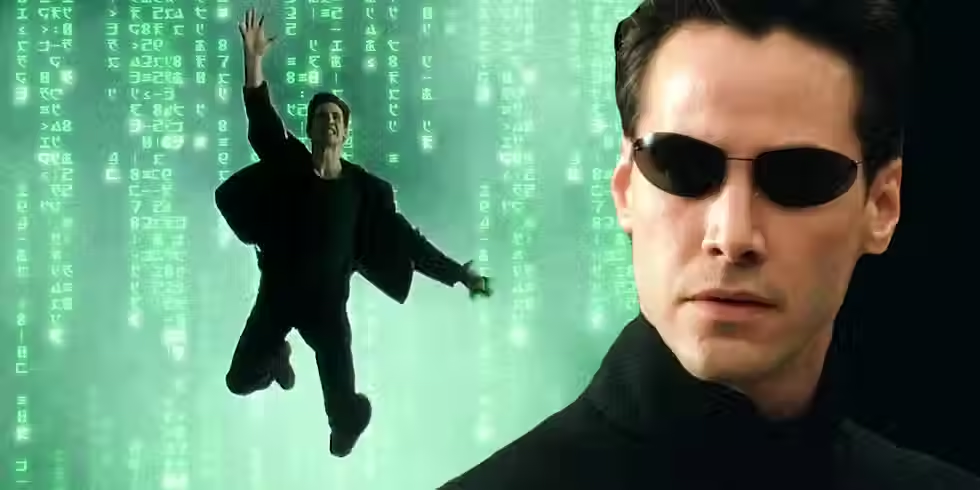
Why? Because a human body cannot jump that far, But inside the Matrix, there isn't really a human body jumping between buildings, There is information, Code.
Once Neo truly understands that distinction, the limits begin to disappear.
5. That's Why Neo Can Stop Bullets
This explains one of the most iconic moments in The Matrix, At first, Neo learns to dodge bullets, But near the end of the movie, something changes, He no longer needs to dodge them, He simply raises his hand, And the bullets stop.
Why? Because Neo has finally stopped thinking of them as bullets, They're code, The wall behind them is code, His own body is code, The Matrix itself is code.

That's why, after his transformation, Neo begins seeing the simulated world as streams of green information, He's no longer just looking at the illusion, He's seeing the system underneath it.
7. Then Smith Becomes the Virus
But Smith eventually changes, After Neo apparently destroys him at the end of the first movie, Smith returns with the ability to copy himself onto other programs and people inside the Matrix, One Smith becomes two, Then dozens, Then hundreds.

Eventually, he begins consuming almost everything in the system, The program designed to eliminate anomalies has itself become an uncontrollable anomaly.
In other words: The antivirus becomes the virus, And that becomes crucial to the ending of the original trilogy.
8. The Biggest Twist: The One Is Part of the System
The first Matrix encourages us to believe a relatively simple story, Machines created the Matrix, humans are prisoners, Neo is The One, The One will destroy the system and free humanity.

Then The Matrix Reloaded introduces The Architect, And suddenly the entire story becomes much more complicated, The Architect reveals that Neo isn't the first anomaly of his kind, The Matrix has existed in multiple versions, And the appearance of The One is not something completely outside the system.
It's part of how the system manages a problem it cannot entirely eliminate, This changes everything.
9. Why Does the Matrix Need The One?
The machines discovered something important, Humans didn't accept a perfectly controlled simulated world, The Architect explains that earlier versions of the Matrix failed, A perfectly designed paradise didn't work.
Why? Because human psychology isn't purely logical, People needed something else...Choice.
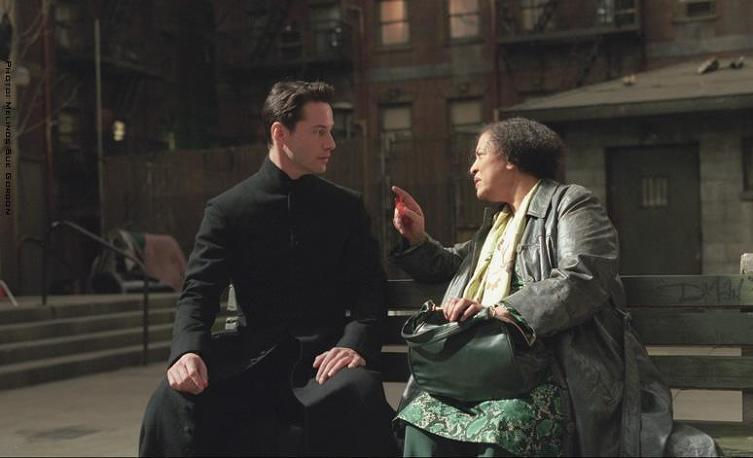
The Oracle helped discover the solution, Humans were more likely to accept the Matrix when, at some level, they were given a choice—even if they weren't consciously aware of making it.
But this created a mathematical problem, Not everyone would accept the system, Those rejections accumulated, Eventually, they threatened the stability of the Matrix.
So the system needed a way to manage the anomaly, That mechanism became: The One.
10. Even the Revolution Was Part of the Plan
This is perhaps the most fascinating idea in the trilogy, Zion—the last human city—believes it is fighting the machines.
The rebels believe they escaped the Matrix, They believe The One will eventually defeat the system.

But the Architect reveals a terrible truth, This cycle has happened before, The One appears, The anomaly grows, The One reaches the Source, The Matrix is reset.
Zion is destroyed, A small group of humans is selected to rebuild it, Then the cycle begins again.
Think about what that means, The rebellion itself has become part of the control system, The machines don't need to eliminate resistance completely, They only need to manage it, That's a much more sophisticated form of control.
11. The Architect vs. The Oracle
Two programs represent very different ways of understanding humanity, The Architect--He represents: Logic, Mathematics, Prediction
Order, Control.
For him, human beings are variables inside an equation, If something goes wrong, calculate the solution.

The Oracle, She represents something very different: Psychology, Intuition, Choice, Emotion, Understanding...She doesn't simply calculate what humans do.
She understands why they do it, And this is why the Oracle becomes so important, The machines originally tried to control humans through mathematical perfection, It failed.
The Oracle understood that humans needed something mathematics alone couldn't provide, The feeling that: I chose this.
12. But Is It Really a Choice?
Now we reach the central philosophical problem, The Oracle often seems to know what people will do, She knows Neo will knock over the vase, She knows he will make certain decisions.
She guides him toward choices before he understands why he's making them, So ask yourself: If someone already knows what you will choose—Are you actually choosing?
The Oracle gives Neo an important idea: Sometimes we have already made a choice, What we don't yet understand is why we made it.

This turns The Matrix into something much bigger than a story about computers, It's asking about free will.
Do we freely make decisions? Or are our decisions the predictable result of personality, memory, biology, circumstances and previous experiences?
13. Cypher Makes the Most Uncomfortable Choice
And then there's Cypher, He knows the Matrix isn't real, He knows humanity is being controlled, He knows the steak in front of him doesn't physically exist, Yet while eating it, he essentially acknowledges: The Matrix tells my brain that this steak is delicious.
So what difference does it make?
Cypher wants to return to the simulation, He would rather forget the truth, He wants comfort, Good food, Status, Pleasure, A normal life.
Even if none of it is real, The movie clearly portrays his betrayal negatively, But the philosophical question behind his decision is much harder to dismiss.
Imagine two lives.
Life A--Real.
But filled with war, darkness, fear and terrible food.
Life B--Artificial.
But you have family, love, comfort, beautiful experiences and happiness, You will never discover that it's a simulation.
Which life would you choose?
Suddenly, the blue pill doesn't seem like such a ridiculous choice.
14. So What Is The Matrix Really About?
It would be easy to say: Humans vs. Machines, But that's only the surface, The deeper conflict is: Truth vs. Comfort, Choice vs. Control, Reality vs. Experience, Logic vs. Human Behavior
And perhaps most importantly: Can a system control you more effectively by giving you the feeling that you're free?
That's why The Matrix remains so interesting decades after its release, The special effects were revolutionary, Bullet time changed action cinema, The costumes became iconic.
But the questions underneath haven't aged nearly as much as the technology.
15. The Matrix Feels Different in the Age of AI
When The Matrix arrived in 1999, its simulated world felt extremely futuristic, Today, the idea doesn't feel quite as distant, Artificial intelligence can generate faces of people who never existed, It can create images of places that were never photographed.
Synthetic voices can sound increasingly convincing, Video can be generated or manipulated, Virtual environments can create experiences disconnected from physical reality, None of this means we're living inside the Matrix.
That's not the point, The interesting connection is much simpler, Twenty-seven years after the movie asked:
How do you know what you're seeing is real?
we increasingly live in a world where that question sometimes genuinely matters, What If The Matrix Was Right?

Perhaps the most frightening idea in The Matrix isn't that machines might someday put humanity inside a computer simulation, It's that perfect control doesn't necessarily require chains.
You don't need to force everyone to obey, Give people a world they understand, Give them comfort, Give them choices, Let them believe those choices belong entirely to them.
And most people may never ask what exists outside the system, Neo's real power isn't flying, It isn't stopping bullets, It isn't superhuman strength.
His real transformation happens when he understands something much more fundamental: The rules he believed were absolute were only rules because he believed in the system that created them.
And that leaves us with the question The Matrix has been asking since 1999: If a false world feels completely real, does the truth still matter?
The red pill is easy to choose when you're sitting safely outside the movie, The harder question is: Would you still choose it if the Matrix was your world?


Comments