
The Story of Singapore's Hawker Culture


An office worker may be eating beside a taxi driver. A Chinese family orders chicken rice while someone at the next table enjoys Malay nasi lemak or Indian roti prata.
The air is filled with the sounds of sizzling woks, clinking dishes and conversations in different languages.

A packet of tissues...
Don't move it! That seat may already be taken.
Welcome to Singapore's hawker culture—where food isn't simply something people eat, It's part of how Singapore lives.
Before Hawker Centres, There Were Street Hawkers
Long before Singapore became famous for its modern skyline, food vendors filled the streets.
During the 19th and early 20th centuries, thousands of hawkers made a living selling affordable meals from pushcarts, baskets and temporary roadside stalls.

They served workers, immigrants and families who needed inexpensive food close to where they lived and worked.
These vendors came from Singapore's different communities, bringing their own cooking traditions with them, Chinese noodles, Malay satay, Indian curries, Peranakan dishes.
Over time, these different culinary traditions began sharing the same streets—and eventually became part of Singapore's unique food identity.

From the Streets to Hawker Centres
Street hawkers were an important part of daily life, but there were problems.
Many stalls had limited access to clean water, proper waste disposal and sanitation facilities. As Singapore rapidly modernised after independence, managing thousands of informal street vendors became increasingly difficult.

Beginning especially in the 1960s and 1970s, the government registered and relocated street hawkers into purpose-built markets and hawker centres.
These new spaces provided running water, electricity, waste disposal and permanent stalls.

Instead of destroying Singapore's street-food culture, the move helped transform it, The hawker didn't disappear, The hawker got a permanent home.
One Roof, Many Cultures
This is what makes a Singapore hawker centre different from an ordinary food court, Walk around one and you'll find dishes with roots across Asia.
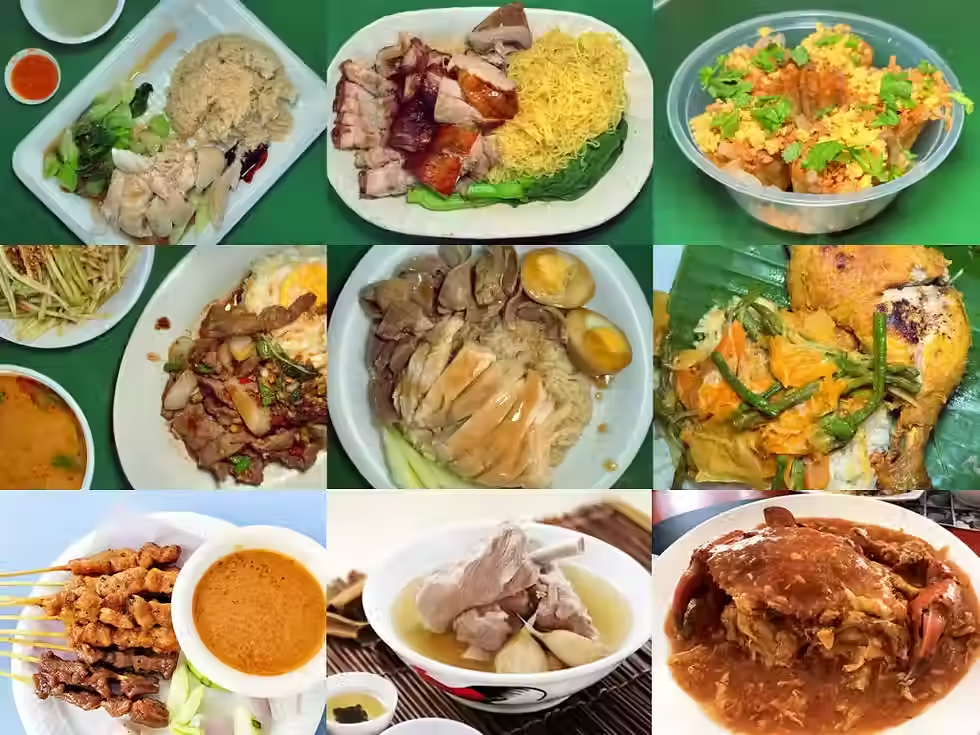
You might see:
Hainanese Chicken Rice: Poached or roasted chicken served with fragrant rice and chilli sauce.
Laksa: Noodles in a rich, spicy coconut-based broth.
Nasi Lemak: Fragrant coconut rice served with sambal and a variety of accompaniments.
Roti Prata: Crispy Indian flatbread usually served with curry.
Char Kway Teow: Flat rice noodles stir-fried over intense heat.
Satay: Grilled meat skewers served with peanut sauce.
These dishes have different cultural origins, yet today they all feel unmistakably Singaporean.
That's because Singapore's food culture developed through generations of migration, trade and communities living side by side, The hawker centre puts all of that history in one place.
The Mysterious Packet of Tissues
Now, back to that packet of tissues sitting on an empty table.
Singaporeans have a word for this: Chope!

To “chope” something means to reserve it, During busy lunchtime hours, people may place a packet of tissues, an umbrella or another small personal item on a table before going to order their food.
To a visitor, the table looks empty, To a Singaporean, the message is obvious: Someone is sitting here.

It's such a small habit, yet it has become one of those charming pieces of everyday Singapore culture that visitors quickly learn.
So if you see tissues sitting alone on a hawker-centre table, don't assume someone forgot them, They may be doing an important job.
Why Are Hawker Centres So Important?
Hawker centres aren't only about food, They're also social spaces, People from different backgrounds, occupations and generations share tables in the same open dining area.
You don't need to dress up, You don't need a reservation.

And historically, hawker food has provided relatively affordable meals in a city where living costs can otherwise be high.
For many Singaporeans, visiting a hawker centre isn't a special occasion.
It's breakfast before work. Lunch with colleagues. Dinner with family. Coffee with an old friend, That's exactly what makes it culturally important.
When Hawker Culture Became World Heritage
In December 2020, Singapore's hawker culture was added to UNESCO's Representative List of the Intangible Cultural Heritage of Humanity.
UNESCO describes hawker centres as “community dining rooms” where people from diverse backgrounds gather and share the experience of dining together.

That recognition wasn't simply about chicken rice or laksa, It recognised the entire culture surrounding hawker food:
the recipes, the skills, the hawkers, the customers and the social spaces that bring people together. A tradition that began with humble street vendors had become internationally recognised cultural heritage.
But the Tradition Faces a New Challenge
There's another side to the story, Many traditional hawker dishes require long hours of preparation, demanding physical work and years of experience.
Some recipes have been passed from one generation to another, But younger Singaporeans today have far more career choices than previous generations.
Taking over a family hawker stall can mean waking before heat, standing beside intense heat for hours and working long days.

Government programmes and younger entrepreneurs are trying to keep the culture alive, while some new-generation hawkers are modernising traditional dishes and experimenting with new ideas , The challenge is finding a balance between preserving tradition and allowing hawker culture to evolve.
More Than Just Cheap Food
For a visitor, a hawker centre may initially look like a convenient place to try Singaporean food, But spend a little more time there and you'll begin to notice something else.
The elderly man who has eaten at the same stall for decades, The office workers sharing a table during lunch.
The hawker who remembers a regular customer's order, The family recipe still being prepared the same way after generations.
And, of course, that lonely packet of tissues guarding someone's seat, These ordinary moments tell a much bigger story.

Singapore's hawker centres were born from migration, transformed by urban development and preserved through generations of food culture.
Today, they remain one of the few places where almost every part of Singapore can meet around the same table.
You come for the food, But what you're really experiencing is Singapore.


Comments